Nesting season rarely announces itself. One week the copse at the end of the field is quiet, the next a buzzard is up and calling over it, and the whole place has changed character. For falconers, spring is an awkward overlap: the hedges, set-aside and moor edges we use are the same places wild raptors need between roughly March and August. We are noticeable — a dog quartering, a hawk on the fist, a vehicle at the gate — and the birds we disturb are usually the ones we most admire. A few changes to routine cost nothing and can be the difference between a brood fledging and a nest failing.
Get the season straight in your head
UK raptors do not run to one timetable. Goshawks and buzzards are often early, with birds settling on eggs in March. Peregrines typically follow into late March and April, kestrels and hobbies later still. Barn owls can be earlier and less predictable than people assume, and pairs that fail early may relay, which can push a nest well into July.
Add the long fledging period, when young are out of the nest but still dependent and noisy, and you are looking at a season that runs from the first display flights to late summer. Treating April as the only sensitive month is the most common mistake.
A late nest is not an empty nest
If a pair loses a clutch to weather or predation, a second attempt is common. A field that was quiet in May can be holding eggs in June. Keep checking as the season goes on rather than relaxing once the leaves are up.
Read the ground before you fly it
Most nests give themselves away long before you stumble across them. Look for whitewash — the splash of droppings that builds below a regular perch or ledge — along with plucking posts scattered with feathers, prey remains, and a pair calling in alarm at your approach. Food passes between birds in spring are a strong hint that a nest is close by.
Do that reading from a distance. Scan with binoculars from the gate, a footpath or the far side of the field rather than walking the hedgerow to check. If you have a scope, use it. Two minutes at the boundary is far less intrusive than a lap of the field with a dog, and it tells you most of what you need to know.
It also pays to ask. The landowner, the keeper and your county bird recorder will often know exactly which pairs are in and roughly where. That conversation takes five minutes and saves a season of accidental disturbance.
Change how you work the ground
Once you know where the sensitive spots are, small adjustments do the heavy lifting.
- Keep to established routes. A predictable line along a track causes less disruption than approaching from a different direction every visit.
- Fly the open side. Where a hedge or spinney holds a nest, work the field away from it rather than along the boundary.
- Hold the dog close. On moorland and rough pasture in May and June, a quartering spaniel covers a lot of ground quickly. Short casts, plenty of stops and a steady recall keep it out of tussocks where hen harriers, merlins and waders may be sitting.
- Keep sessions short. Twenty focused minutes is usually better for the hawk and the wildlife than an hour of wandering.
- Do not linger to watch. Passing through is one thing; standing at the fence line for fifteen minutes to see what happens next is another.
Noise matters too. Whistles, shouts and the bell on your bird's leg all carry further than you think on a still spring morning.
When wild and trained birds meet
Spring is when resident raptors are at their most territorial, and a wild peregrine or goshawk will not distinguish between a rival and your bird. If a wild raptor comes up to mob you, bring your hawk down, put it on the fist if it will settle, and walk away from the area rather than standing your ground. Avoid flying lures or swinging a bird in front of a known nest ledge or crag. It is not only about protecting the wild pair — a serious encounter can injure your bird badly, and a caused injury is a miserable way to end a season.
Report what you see, and report it well
Falconers are on the ground at the hours and in the places where records are thin, so your sightings are genuinely useful. Send them somewhere they will be counted: your county bird recorder, BirdTrack, or the local records centre. Note the date, the behaviour and a grid reference — but think before you make that reference public.
Some species have extra legal protection at the nest, and disturbing them can be an offence. That is why precise locations, nest photographs and fledgling shots should not go on open social media. Share the record with the recorder; let them decide what goes out. If you are unsure whether a licence or permission is needed for anything you plan to do near a nest, ask the relevant statutory conservation body for your part of the UK.
If you suspect persecution — a disturbed nest, a trapped or shot bird, baits — report it to the police and do not go back into the site yourself. Call 101, or 999 if a crime is in progress.
Make your flying ground better for raptors
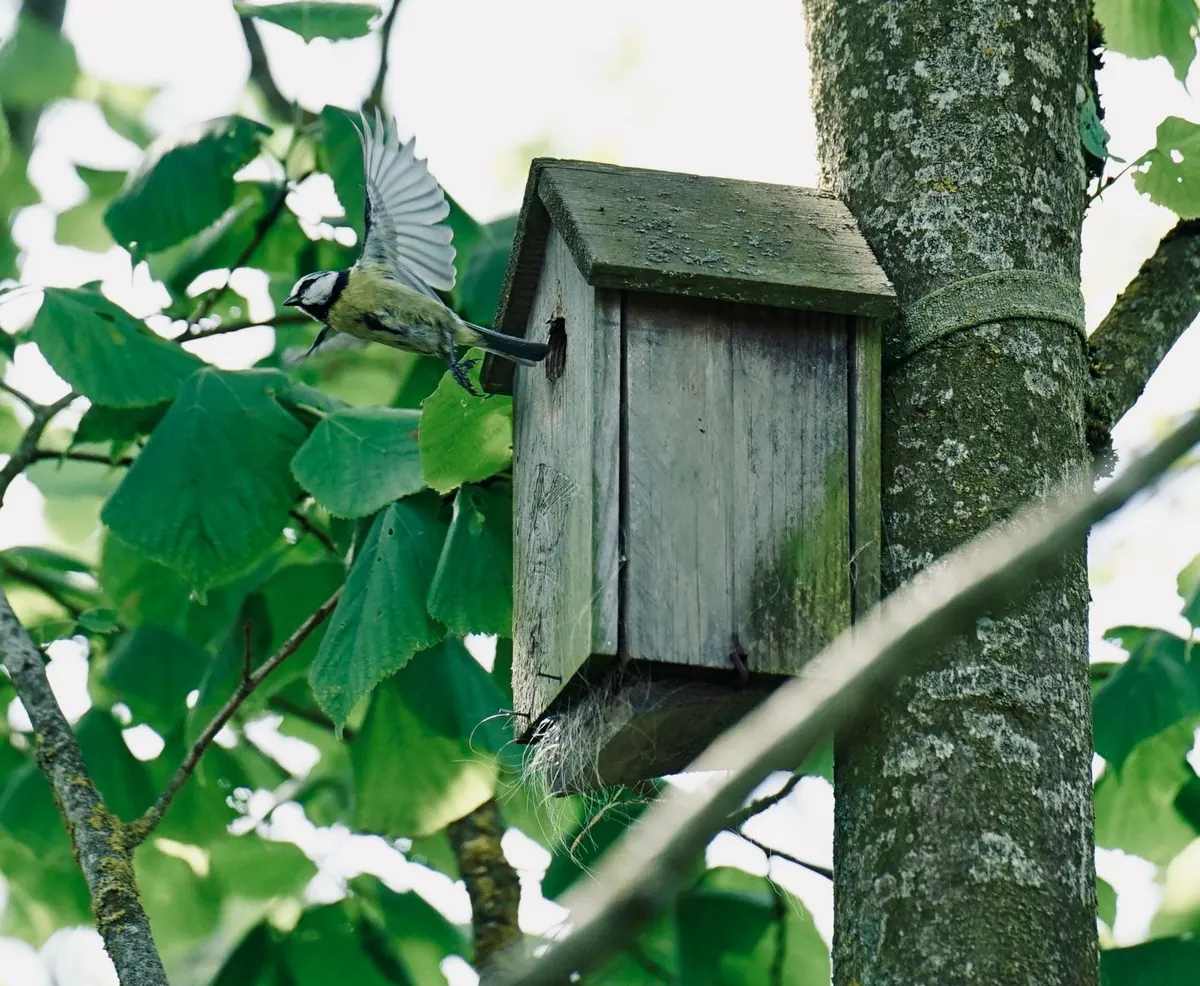
Disturbance is only half the story. The ground you already manage can be improved for wild birds with very little effort. Leave a rough, tussocky margin at field edges and let it stand through the summer. Avoid cutting hedges or flailing scrub in the breeding season. A kestrel or barn owl box, properly sited and facing the right way, will often be taken within a season or two. Perch posts on open grassland give hunting birds somewhere to sit, and a small drinking point helps in dry spells.
Think about what you put on the ground as well. Rodenticide used carelessly around yards and barns can find its way into owls and other predators. Use it strictly as directed, or not at all.
Your spring checklist
- Ask locally which pairs are in and roughly where.
- Scan for whitewash, plucking posts and alarm calls before you walk a field.
- Keep the dog close and shorten your casts on rough ground.
- Change your route rather than your sport where a nest is close.
- Bring your bird down and move away from any wild raptor that comes in.
- Send records to the county recorder and keep precise locations offline.
- Leave a margin, delay the hedge cutter, and check that box is still up.
None of this asks you to give up your season. It asks you to know the ground you fly, to be predictable rather than intrusive, and to keep quiet about the things that need protecting. Do that, and the birds that nest alongside your flying field will keep coming back — which is, in the end, the whole point of being out there.
Photo: MayaVB / Pexels