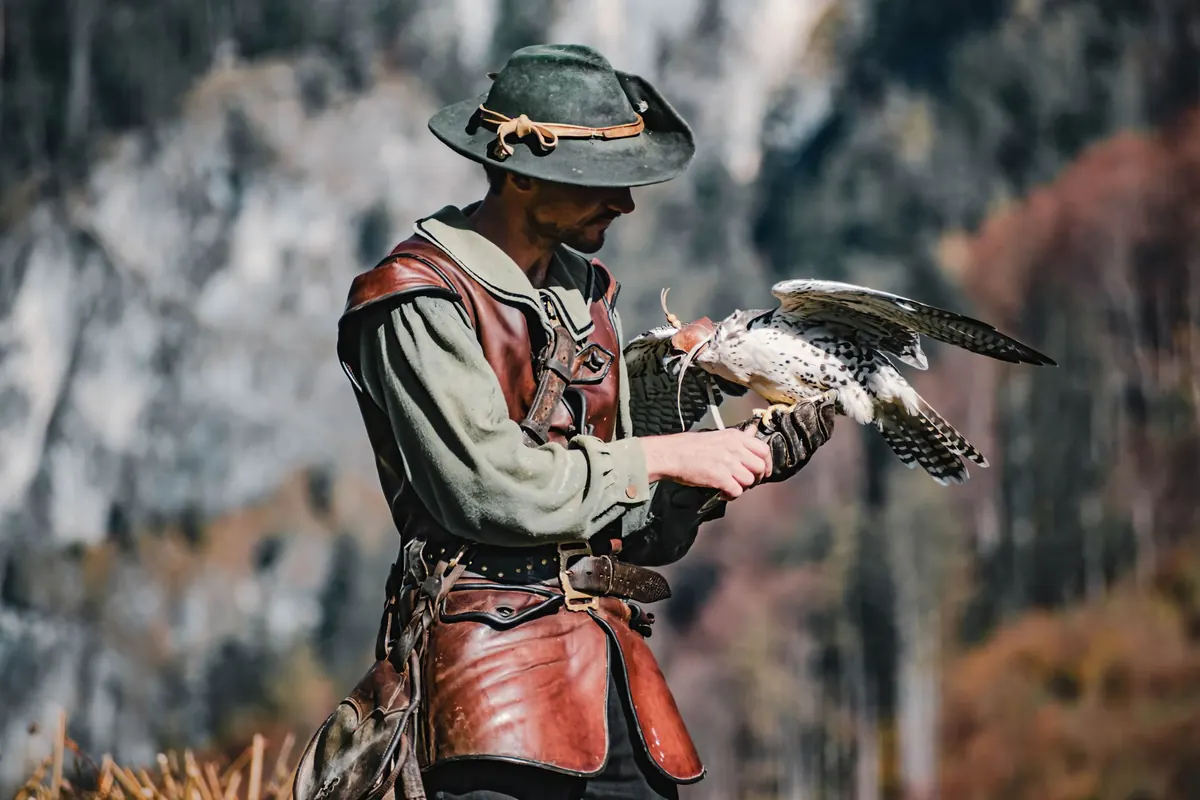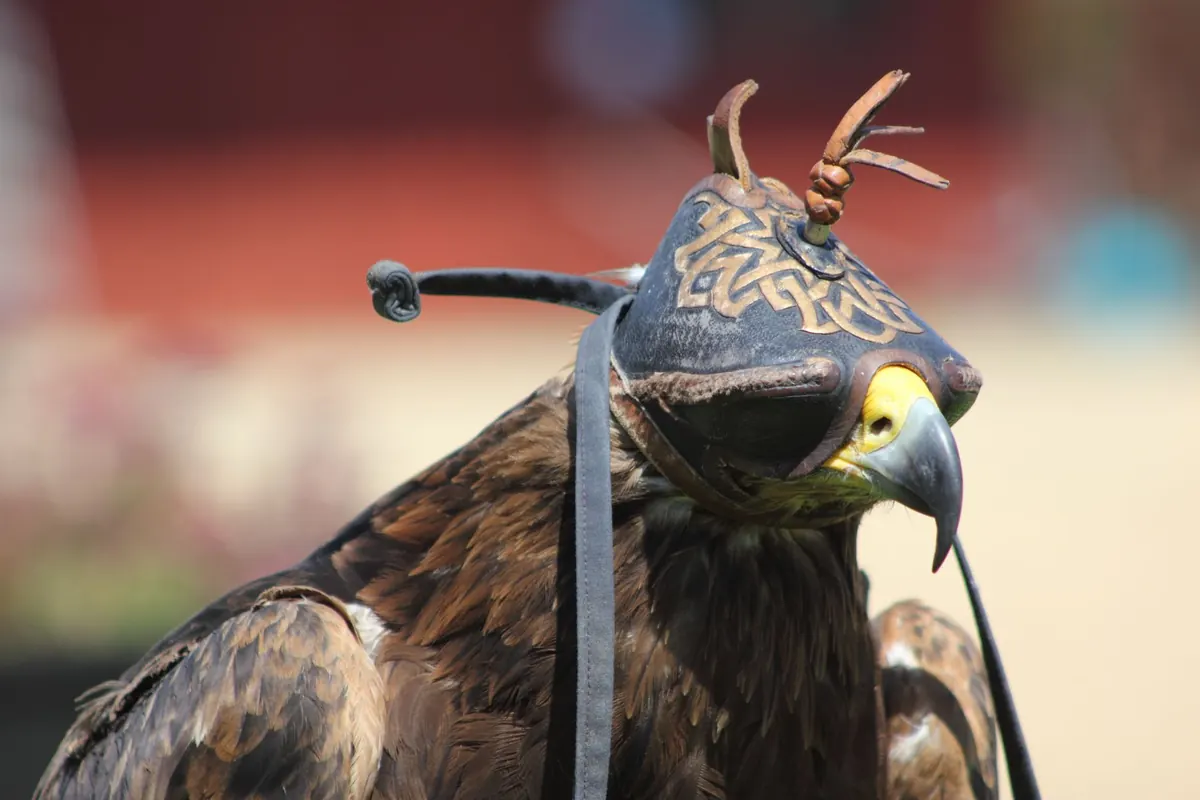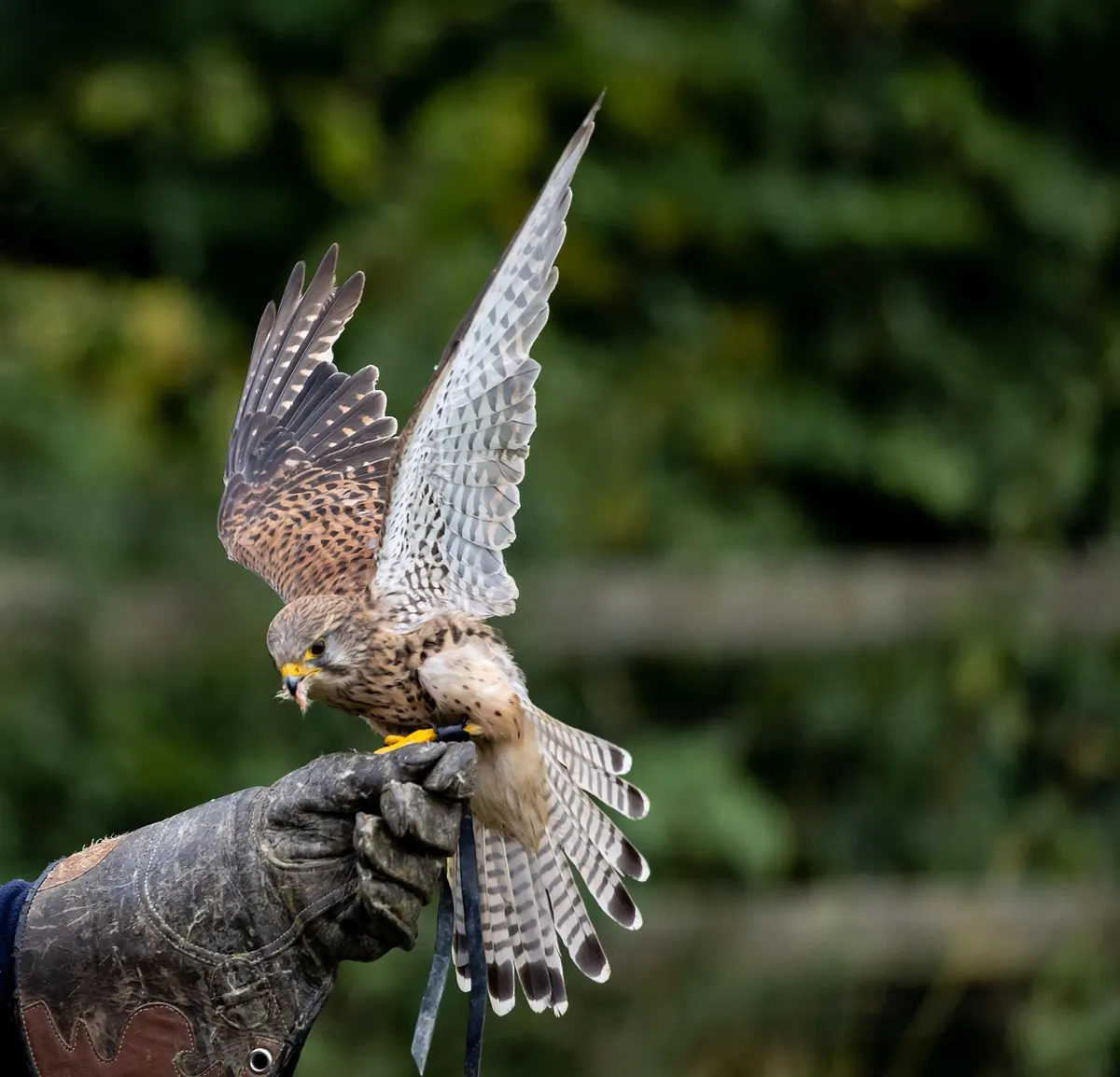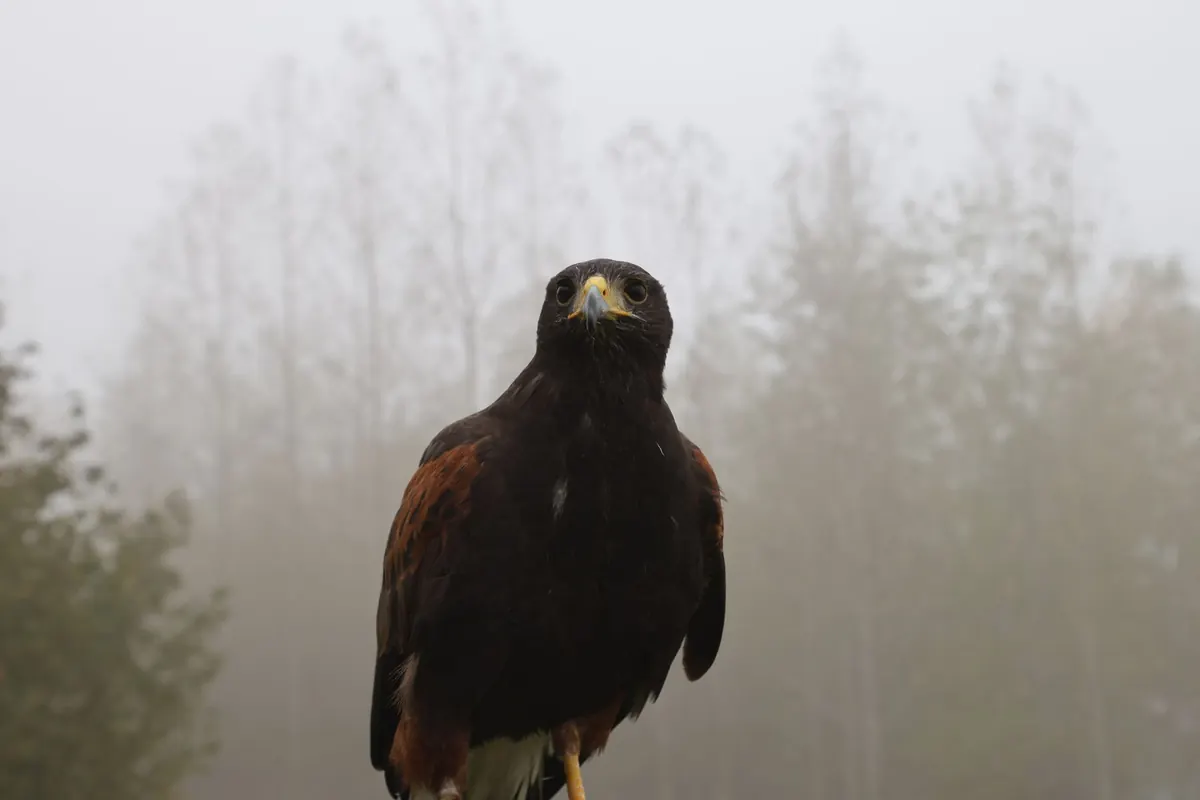
The first sharp morning after a soft September changes everything. The hedges thin, rabbits push further out into the stubble, and the hawk on the block is leaner and sharper than she has been for months. Autumn is the falconer's season: the moult is finished, the quarry is young and careless, and there is still enough light after work for an evening slip.
It is also the season when the rules catch people out. Close seasons, general licences, the Hunting Act, sporting rights and footpaths all apply at once. Here is what actually matters in the field, across the UK.
What Autumn Gives You
By late September most hawks are out of the moult with fresh, strong feathers, and the temptation is to go straight onto hard quarry. Don't. A bird that has spent three months heavy on the block needs weeks of gradually reduced rations and short, easy flights before it is fit for a cock pheasant or a hare. Build the fitness first; the quarry will still be there in November.
Autumn quarry is also more forgiving. Young rabbits of the year are careless through October, and juvenile pigeons make mistakes on their first flights into stubble. A young hawk learns more in six weeks now than in a whole hard winter.
Then there is the weather. Dew, mist and the first gales arrive together. A hawk flown wet and chilled loses condition quickly, so keep sessions short, fly early, and get the bird dried and fed before the cold settles in.
The Autumn Quarry List
What you may legally fly at depends on where you are in the UK, not just on what your hawk can catch. As a general picture:
- Rabbit. The bread-and-butter quarry for most hawk and ferret teams, and legal year-round on land where you have permission.
- Grey squirrel. Non-native and unprotected, so no close season and no licence needed. Sharp, testing autumn quarry for a bold young hawk.
- Woodpigeon. In season from 1 September across most of the UK, with exact dates and conditions differing between England, Wales, Scotland and Northern Ireland.
- Crows, magpies, jays, jackdaws and rooks. Takeable under the relevant general licence in each country, provided you are the landowner or have their authority and meet the licence conditions.
- Game birds in season. Grouse from 12 August, partridge from 1 September, pheasant and woodcock from 1 October in England and Wales. Never fly at reared game without the shooting tenant's explicit say-so.
- Duck and goose. Wildfowl seasons open on 1 September inland across most of the UK, with longer coastal dates for some species.
- Hare. Brown hare has no statutory close season in England and Wales, but the decision to fly at one is as much about your bird's welfare as the law. Mountain hares in Scotland are protected.
Anything not on that list — herons, buzzards, kestrels, owls, most songbirds — is protected, and taking or injuring one is an offence. If your hawk catches something protected, get to it quickly, release it unharmed if it is alive, and if the bird is ringed, report the ring to the British Trust for Ornithology.
Seasons, Licences and the Hunting Act
The Wildlife and Countryside Act 1981 is the backbone of all of it. Every wild bird is protected unless it appears on a quarry list or under a general licence, and the general licences for England, Wales, Scotland and Northern Ireland are separate documents with separate conditions. They are revised, sometimes at short notice, so read the current version for your country each season rather than relying on last year's.
A general licence is not a free pass. It permits certain people — typically the landowner or occupier, or someone acting with their authority — to take or kill named species for specified purposes, using permitted methods. On someone else's land, the permission conversation and the licence conditions are two separate things, and you need both.
For mammals, England and Wales are governed by the Hunting Act 2004 and Scotland by the Protection of Wild Mammals (Scotland) Act 2002. Falconry sits inside an exemption in both: you may use a bird of prey to hunt a wild mammal on land where you have permission, and dogs flushing for the hawk fall within defined limits. Read those exemptions properly rather than trusting the version you heard in a car park.
Scotland has also been changing its licensing framework for birds of prey, and Northern Ireland runs its own registration and licensing arrangements. Check the current position with the relevant statutory body before the season starts, and take proper advice if your plans are anything other than straightforward.
Access: Permission, Sporting Rights and Other People
Permission is the most important item in your kit. In England and Wales there is no general right to enter land to hawk, and the person who can say yes is whoever holds the sporting rights — which is not always the farmer who owns the field. On rented ground those rights may be let to a syndicate or an individual, and their consent is the one that counts.
Scotland has statutory access rights under the Land Reform (Scotland) Act 2003, but those rights do not extend to hunting or taking wild animals. You still need the landowner's permission to fly. Northern Ireland works on the same principle: ask first, every time.
A few habits that save trouble later:
- Carry written permission with a name, a phone number and the dates it covers.
- Ask about footpaths, bridleways, livestock, deer stalking and shoot days before you go, not on the morning.
- On Sites of Special Scientific Interest, National Nature Reserves and similar designations, check whether the conservation body's consent is needed as well as the landowner's.
- Tell someone where you are going and when you expect to be back.
Flying Well in Autumn Weather
Autumn slips are usually made into a headwind, which gives the hawk lift and the quarry a fair start. Learn to read the ground: stubble holds scent and slows a rabbit, wet pasture is quick and quiet, and a first frost hardens everything and makes the hawk's approach louder.
Watch weight and temperature together. A hawk flown at summer weight into a cold October wind will be slow and may not commit; a hawk dropped too hard will chase anything and take needless risks. Weigh daily, adjust gradually, and be willing to put the bird back on the block and go home if the conditions or the quarry are wrong.
Telemetry, a bell and a reliable recall are not optional extras now, when leaves are still on the brambles and the light goes early. Check the battery before you leave the car, not after the hawk has disappeared over the hedge.
Your Pre-Flight Check
- Confirm permission in writing, and know who holds the sporting rights.
- Read the current general licence for your country and the close seasons for the quarry you are after.
- Check that insurance and club membership are in date; third-party cover protects you and the sport.
- Weigh the bird, test the telemetry, and pack a spare leash and a basic first-aid kit.
- Read the forecast and the ground: wind direction, footpaths, livestock, other people.
- Plan how you will dispatch and carry quarry home, and how you will release anything you should not have caught.
Autumn rewards preparation more than any other part of the year. Get the permission, the paperwork and the bird's fitness right, and the season looks after itself: long walks, short slips, and a hawk that comes home tired and fed.