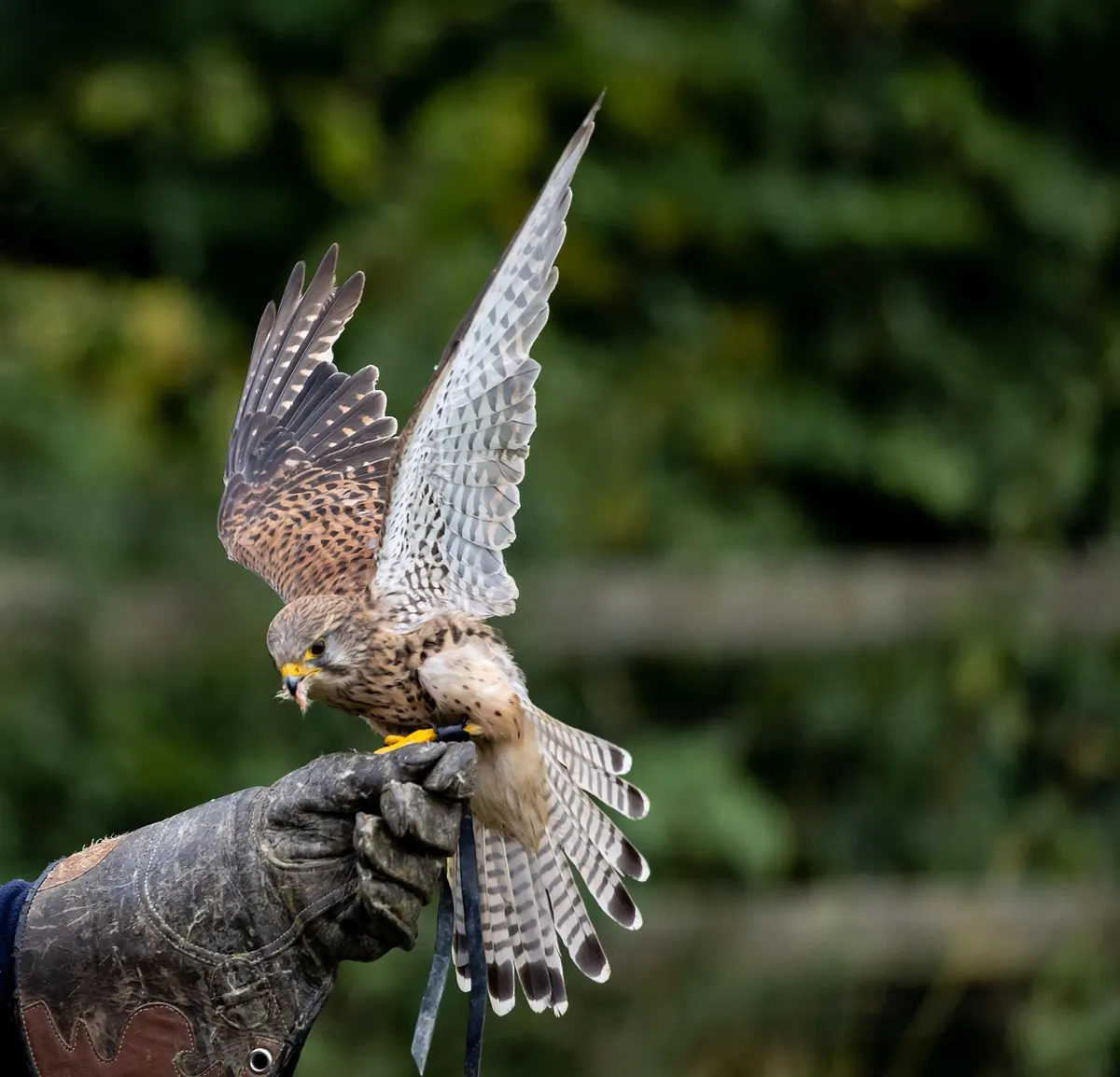
You have the perch bolted to the wall, the glove broken in, and a hawk sitting in the weathering area who would plainly rather you were somewhere else. That is normal. Manning is the slow business of turning a nervous bird into one that accepts your presence, your hands and your world without flinching. Done properly it takes weeks rather than days, and everything that follows — recall, hunting, flying free — rests on it.
What Manning Actually Means
Manning is not training. It is the process of accustoming a hawk to people, places, noises and handling until none of them alarm it, until it will sit calmly on the fist while a lorry passes, a dog barks and a stranger walks within a few feet. Training comes afterwards. A hawk that has not been manned will never fly reliably to the fist, however much food you carry.
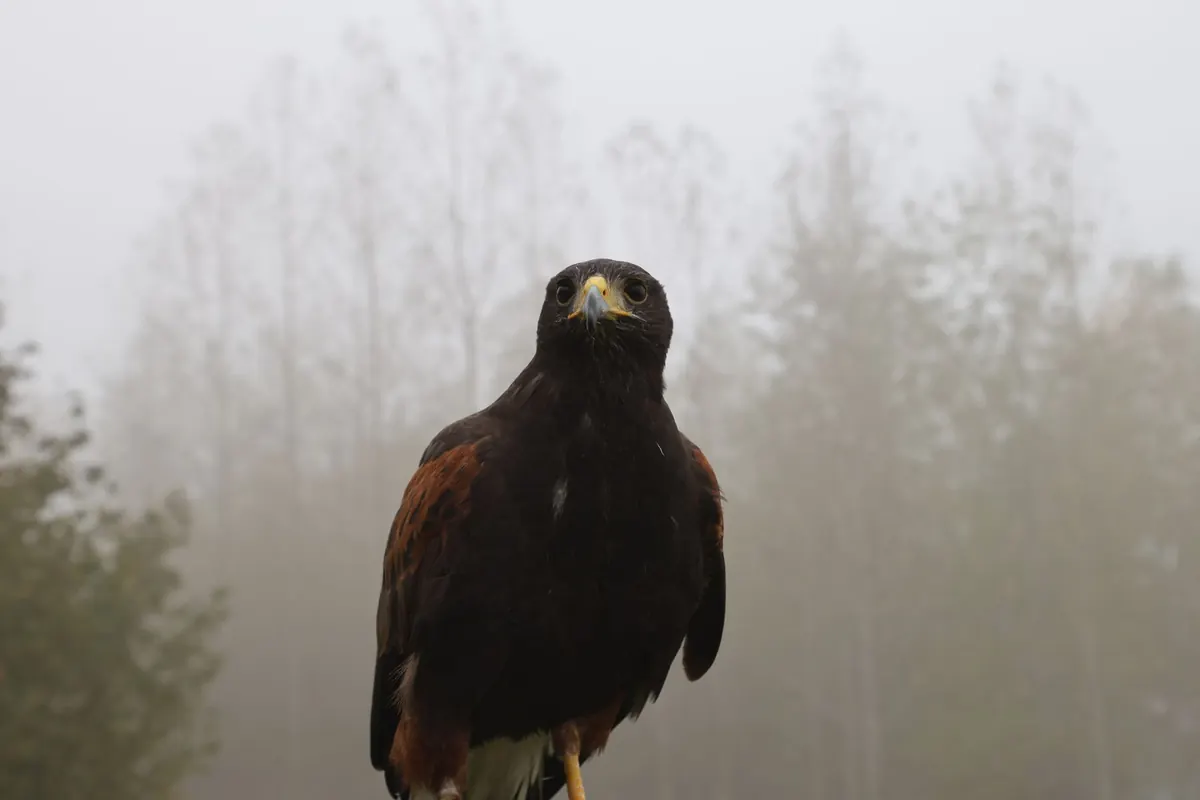
Harris's hawks make this easier than most. They are social birds that live in family groups in the wild, and many settle to human company surprisingly quickly. Some birds are steady within a fortnight; others need months of quiet, patient work. Temperament varies enormously between individuals, so resist comparing your bird with somebody else's.
Before the First Session
Get your kit and your routine sorted out before the hawk arrives, not after. You will need, at minimum:
- A gauntlet that fits properly — loose leather is worse than none at all.
- A pair of jesses and a swivel, in good condition and checked before every session.
- A leash of sensible length and a perch with a secure tether point.
- Accurate scales, ideally reading to a few grams.
- A quiet indoor space with the door shut, where a bating hawk cannot reach anything breakable.
- A reliable supply of suitable food, thawed and at room temperature.
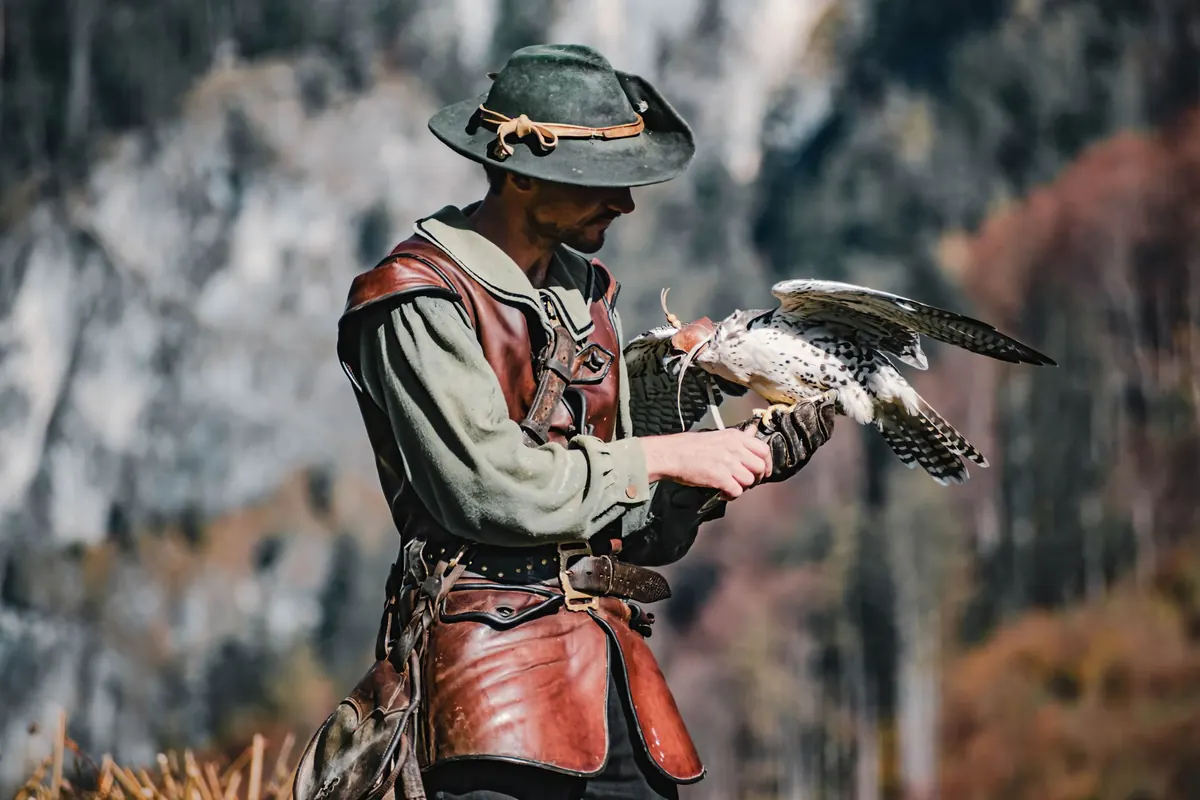
If you can, spend time with an experienced falconer before you buy the bird. Watching someone else handle a hawk for a morning teaches more than any book, and a mentor will spot problems in your technique long before they become habits. Check the current legal position on keeping and registering your bird as well; requirements change, and your club or the relevant authority is the place to confirm them.
The First Week on the Fist
Start indoors, in low light and low noise, with the hawk on your fist at roughly waist height. Ten to fifteen minutes is plenty at first, repeated several times a day. Sit still. Talk quietly if it helps you relax, but do not stare at the bird, and do not stroke it. Offer small pieces of food from the glove, one at a time, and let the hawk take them at its own pace.
Bating — the hawk throwing itself off the fist and hanging upside down — will happen, and it is not a disaster. Do not tug at the leash or grab at the bird. Either lift your fist beneath it so it can step back up, or wait quietly until it rights itself, then settle it gently. Making a drama of a bate teaches the hawk that the bate is worth making.
Reading the Bird
Much of manning is simply learning what your hawk is telling you. Watch the body rather than the beak.
- Rousing — a full-body shake of the feathers. A good sign; the bird is relaxing.
- Standing tall, one foot tucked, eyes half closed — comfortable and settled.
- Feathers held tight, leaning away, panting with the beak open — stressed, too warm, or both. Reduce the session and cool things down.
- Repeated bating — you have asked for too much, too soon. End the session and step back a stage tomorrow.
- Tail flicking and calling at the sight of food — hunger, and often the beginnings of food aggression. Manage it with calm, consistent routine rather than by starving the bird into compliance.
Building the World In
Desensitisation works by adding one new thing at a time, at a distance the hawk can cope with, and closing that distance only when the bird stays relaxed and still takes food. A workable progression looks like this:
- Quiet indoor carrying, no distractions.
- The same, with ordinary household noise — radio, doorbell, vacuum cleaner.
- Outdoors in a quiet garden or empty yard, at a still hour.
- Moderate stimuli at a distance: traffic on a far road, a dog on a lead across a field.
- Closer contact, or a walk through a busier area, offering tidbits throughout.
One new variable per session, and always finish while the hawk is still calm. If it bates repeatedly, you have moved too fast; retreat a step and rebuild. Never flood a bird with everything at once in the hope it will get used to it. Some will, many will not, and you will have set your progress back a fortnight.
Weight, Routine and Common Mistakes
Weigh your hawk at the same time each morning and write it down. You are looking for a flying weight at which the bird comes to the fist readily and works with you, not a weight at which it is weak. Bring a bird down gradually, a few grams at a time, and never leave it hungry and cold. An underweight hawk is not obedient; it is in trouble.
The most common mistakes are all a matter of pace. Rushing the early days because the hawk looks calm on day three. Handling only at feeding time until the fist means nothing but food. Carrying the bird through a busy market in week one. Leaving a tethered hawk unattended, even briefly. Skipping a day because it is raining, then wondering why the routine has slipped.
Keep sessions short, keep them regular, and keep your own movements slow and predictable. Consistency matters far more than technique at this stage. If your hawk's droppings change, its weight drops unexpectedly, or it sits fluffed up for long periods, speak to an avian vet rather than waiting to see.
Getting the Right Help
Find a local falconry club and go along before you need it. Most are glad to help a beginner, and an hour with someone experienced will save you weeks of fumbling. Pair that with a good avian vet who has seen birds of prey before, and keep notes on weight, food and progress so you have something concrete to discuss. Manners, patience and routine will man a Harris's hawk far more reliably than any shortcut — and the bird will tell you when you are getting it right.
Photo: jggrz / Pixabay